Opening
We are standing at the dawn of the Agentic AI era. Agentic AI refers to systems that can plan, decide, and act across business workflows. These systems are still in their early stages, but they are already real and reshaping how enterprises operate.
The initial hype around Large Language Models (LLMs) has matured into a deeper recognition: AI is no longer a novelty — it is becoming business infrastructure. The conversation has shifted. Companies are no longer asking if AI will matter; they are asking how fast and how safely it can be woven into the fabric of their operations.
According to McKinsey’s State of AI 2025 report, 78% of organizations already deploy AI in at least one function. Adoption is no longer speculative — it is systemic. The leaders who thrive in this new era will be those who treat AI not as a tool, but as a partner in rethinking work, scaling decision-making, and unlocking entirely new business models.
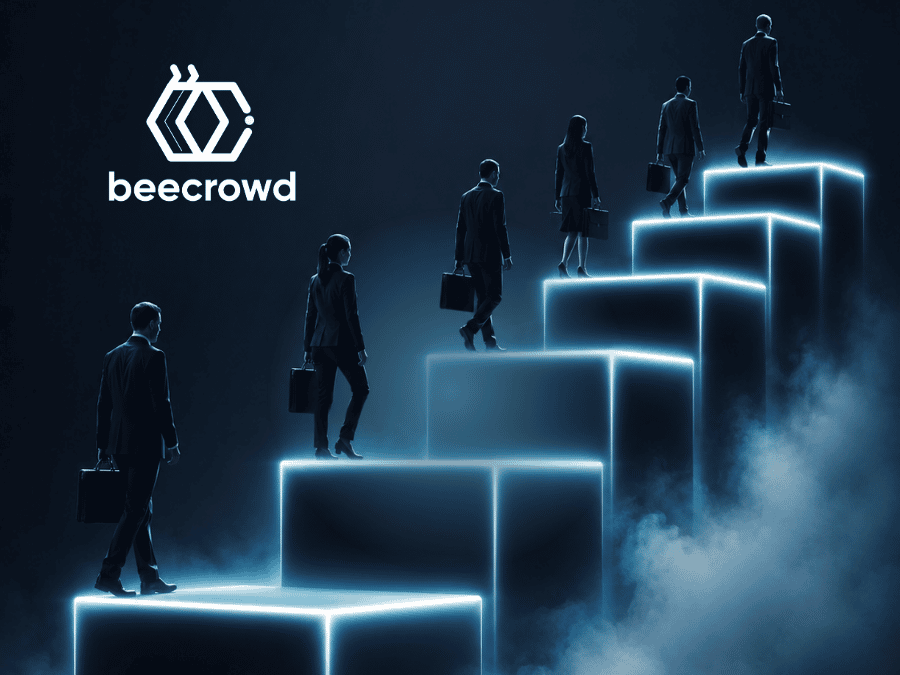
The framework below illustrates where Agentic AI is headed and the impact it will have on business.

Today, most enterprise deployments remain at the Task and early Workflow stages, with humans firmly in the loop. Many analysts estimate that fully autonomous agents—systems with broad access and minimal oversight—may become viable within a 3–5 year horizon, depending on governance, trust, and regulatory maturity.
But this raises a critical question: what does “autonomous” really mean? Will it take us toward a dystopian, Skynet-like future — or toward a more collaborative vision, closer to Iron Man’s JARVIS?
Framing the Moment: Early Days, Clear Direction
Despite the headlines and popular fears, enterprise AI is not drifting toward a rogue Skynet future. Perhaps one day—if we ever reach Artificial General Intelligence (AGI)—that possibility may arise. But today’s reality is different: momentum is firmly moving toward human-centered copilots that augment teams. The trajectory is much closer to Iron Man’s JARVIS than to unchecked autonomy.
Three forces are shaping that path:
- Mainstream adoption with business results. According to McKinsey’s State of AI 2025 report, 78% of organizations now use AI in at least one business function, up from ~72% in the prior year. The conversation has clearly shifted from if AI will be adopted to how quickly and how safely it can be scaled across the enterprise.
- Governance is catching up fast. The EU AI Act came into force on August 1, 2024, with staged obligations through 2025–2027. In parallel, the NIST AI Risk Management Framework gives companies a practical playbook to manage risk. Together, they push the industry toward safer, auditable, human-in-the-loop systems — the opposite of a Skynet trajectory.
- Agentic platforms are arriving with controls built in. Enterprise-grade “agent workbenches” and security copilots are launching with policy, audit, and kill-switch features as defaults, not afterthoughts.
Real, Grounded Business Applications (Today)
To see the future of Agentic AI, look at the present first:
- Customer Operations. Klarna’s production AI assistant handled two-thirds of service chats in its first month — the equivalent of 700 full-time agents. Average resolution time fell from 11 minutes to ~2, repeat contacts dropped 25%, and CSAT (Customer Satisfaction Score) remained on par with humans. The lesson: oversight + scope discipline = measurable results.
- Cybersecurity. Microsoft Security Copilot cut investigation time by 40% and improved routine task efficiency by 60%+. Enterprises are now deploying Copilot agents to automate phishing triage and identity hygiene — with human review and policy controls baked in.
- IT & Shared Services. As an example, case studies from industries such as banking and telecom show that agentic ITSM deployments can achieve up to 60% faster resolution times for common incidents. These results are illustrative of early gains, though not yet universal benchmarks across the market.
- Process Orchestration. Low-code agent workbenches now coordinate multiple agents across legacy systems. Early use cases include loan evaluation, escalation handling, and inquiry routing — featuring model-agnostic interoperability and enterprise marketplaces.
- Workforce Productivity. Surveys, including Microsoft’s Work Trend Index, indicate that a large majority of knowledge workers (often cited in the 70–80% range) already use AI tools in their daily work. This signals that adoption is broad, crossing functions and geographies.
These are not science-fiction. They are early — but repeatable — patterns showing that when paired with oversight, Agentic AI delivers speed, quality, and scale.
Why the Path Bends Toward Iron Man?
There are three reasons why the market is moving JARVIS-way, not Skynet-way:
1. Regulation and Standards enforce human-centered design. The EU AI Act bans “unacceptable-risk” uses and requires transparency for general-purpose models by 2025, with stricter obligations by 2027. NIST’s AI RMF is now a global reference. Together, they institutionalize explainability, auditability, and human oversight.
2. Enterprise risk posture prefers constrained autonomy. Gartner has named Agentic AI a top strategic technology trend for 2025, while also cautioning that uncontrolled autonomy introduces significant risks. Their guidance emphasizes transparency, constraints, and human accountability. In practice, most enterprises continue to prefer supervised agents, investing in governance, policy, and control mechanisms rather than removing humans from critical loops.
3. Capital funding might bring maturity to AI practices. Citigroup forecasts that hyperscaler AI capital expenditure (capex) will exceed $2.8 trillion by 2029. Just as massive investment in cloud infrastructure a decade ago normalized enterprise-grade controls, this new wave of AI infrastructure spending may drive the standardization of identity, policy, and observability for AI agents.
The most important insight from the framework shown in the beginning is not just how AI is evolving — but that humans remain in the loop at every stage of AI evolution. And the reason is simple: accountability.
Who is accountable when AI loses millions — or billions — through a bad decision? Model trainer? System engineer? CEO? One thing is certain: the AI itself will never be held accountable. Machines can’t own liability. Humans will.
A CEO’s Playbook: Steering Toward JARVIS, Not Skynet
Every CEO must anchor their AI program around four pillars:
- Strategy. Define and prioritize where AI creates business value. Focus on end-to-end processes, not areas or tasks. Move beyond experimentation and tie initiatives directly to revenue, cost, and risk KPIs.
- Control. Build oversight, scope limits, and fail-safes into every deployment.
- Governance. Align with emerging standards (NIST AI RMF, EU AI Act) and make auditability non-negotiable.
- Reskill & Reallocate. Position humans where they excel — creativity, critical analysis, and informed decision-making — supported by AI and advanced analytics.
Practical steps to operationalize this vision:
- Declare an AI Strategy (act now). With adoption at 78%, “wait and see” is riskier than controlled rollout. Tie your AI north star to revenue, cost, and risk — not R&D vanity.
- Prioritize 3–5 Agentic “Jobs to Be Done.” Start with low-hanging fruit: IT & employee services (passwords, access, provisioning), Security (alert triage, incident response), FinanceOps (quote-to-cash workflows) are some examples.
- Build Guardrails Up Front. Adopt NIST AI RMF as your baseline. Map your roadmap to the EU AI Act even if you don’t operate in Europe. Require every agent to have: human override, policy-aware access, logs, evaluation harnesses, and rollback plans.
- Organize for Scale. Use a centralized governance / federated delivery model. A small central team defines platforms and guardrails; business units own outcomes and iterate. This “rewiring to capture value” is already visible in McKinsey research.
- Measure Relentlessly. Track productivity (cycle time, automation rate) and trust (escalations, hallucinations, policy violations). Publish a monthly Agent Scorecard to the executive team.
How beecrowd Helps
If your organization hasn’t yet crystallized an AI strategy — or your AI efforts are still confined to isolated pilots — you’re already falling behind. The imperative is to move fast, deliver measurable impact, and establish a repeatable growth engine.
Pick three high-confidence agentic use cases, put governance in place, and deliver results in 90–120 days — while building the foundation for scale. beecrowd can help you put your AI strategy into practice with flexibility, cost efficiency, and scale.
- We have a large Latin American community of developers, connecting enterprises all around the world to top-tier tech talent in LATAM.
- We vet talent via a gamified programming and assessment platform — our “competitive programming” engine ensures the people you get are pre-validated for coding, analytical thinking, and problem solving.
- Our Talent Cloud gives you access to the top 1% of tech talent across five seniority levels, fluent in English, Spanish, or Portuguese.
- We leverage AI-powered matching to connect you with top professionals — pre-vetted for technical skills and business fit — so your AI deployment team assembles more quickly and with greater agility than through traditional hiring.

Alexander Han Yen is the Founder of Horizon Business Consulting and SMBeez, an AI consulting firm that develops agentic AI solutions for small and medium businesses. He holds an MS in Business Analytics & AI (MSBAi) from NYU Stern and helps organizations adopt AI to automate workflows, scale decision-making, and drive growth. Alexander also serves as U.S. Client Acquisition Lead at beecrowd, connecting enterprises with top Latin American tech talent.