What organizations and talent need to understand now
The future of employment is no longer a distant exercise in futurology; it has become an urgent topic at the tables of leaders, HR teams, and technology professionals. As artificial intelligence, advanced automation, and other emerging technologies gain scale, the labor market is undergoing a structural transformation. In this context, more than predicting which roles will emerge or disappear, it is essential to understand the possible scenarios — and, above all, how people and companies can prepare for them.
Recent studies by the World Economic Forum indicate that the future of employment will not be singular or linear. On the contrary, it is likely to unfold along multiple paths, influenced by factors such as technological governance, the speed of AI adoption, and the workforce’s ability to reskill. Discussing scenarios, therefore, means acknowledging that decisions made today will shape very different professional realities tomorrow.
Technology as a Catalyst for New Asymmetries
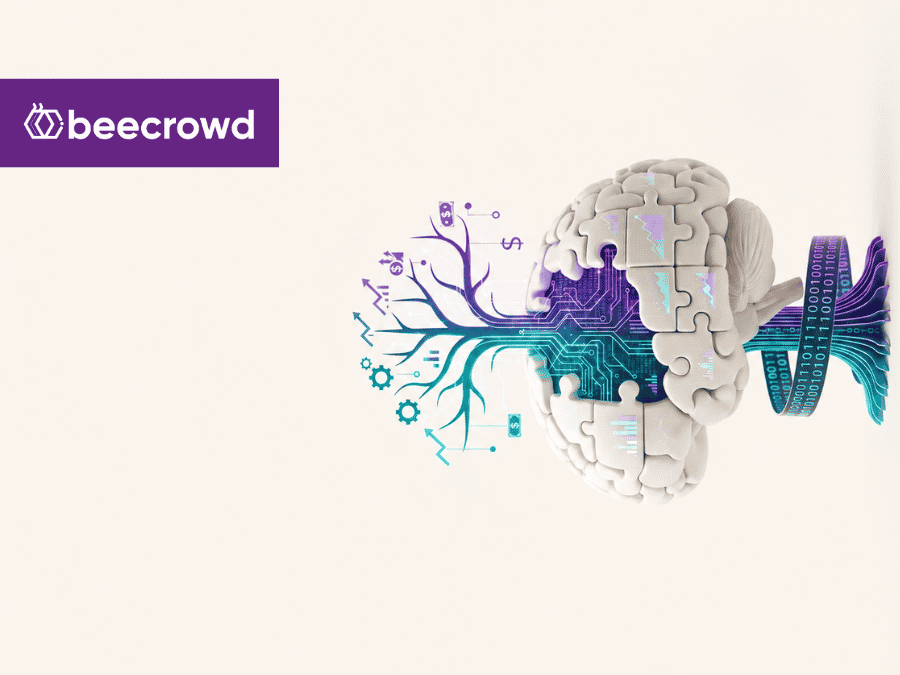
In a first scenario, technology advances faster than the ability of organizations and society to absorb it. In this environment, automation replaces functions at an accelerated pace, while reskilling happens unevenly. As a result, the gap widens between highly skilled professionals — especially in technology, data, and AI — and those whose roles become obsolete.
Although this scenario generates significant productivity gains, it imposes critical challenges on the labor market. Companies begin competing intensely for specialized talent, while a significant portion of the workforce struggles with reintegration. For HR, the strategic role goes beyond hiring and starts to include workforce planning and continuous investment in upskilling and reskilling.
Human Leadership in a Redesigned Labor Market
On the other hand, a second possible scenario points to a more balanced integration between technology and people. In this context, AI is used as a tool to enhance human capabilities rather than merely replace them. Professionals take on more analytical, creative, and strategic roles, while repetitive tasks are automated.
In this model, skills such as critical thinking, complex problem-solving, and collaboration become as valuable as technical competencies. Consequently, the concept of employability is redefined: it is no longer about mastering a single function, but about continuous learning. For companies, this means rethinking career paths, evaluation models, and internal development strategies.
The Fragmentation of Work and New Professional Arrangements
There is also a scenario in which traditional employment loses centrality. With the advancement of digital platforms and project-based work, employment relationships become increasingly fragmented. Professionals operate more autonomously, connecting with organizations based on specific demands, while companies build more flexible talent ecosystems.
In this environment, the line between employee, freelancer, and partner becomes blurred. At the same time, opportunities arise for greater diversity of profiles and the inclusion of global talent. However, this scenario also requires new models of management, engagement, and compliance, especially with regard to social protection and career sustainability.
The Importance of Choices Made Today
Regardless of which scenario will prevail — or how they will combine — one premise remains: the future of employment will be shaped by decisions made in the present. Organizations that view technology merely as a cost-reduction tool tend to face talent shortages. Those that invest in people, data, and market intelligence expand their ability to adapt.
For recruitment, this means going beyond a résumé-focused approach. The challenge becomes identifying potential, learning capacity, and alignment with constantly evolving contexts. In this sense, platforms that connect companies with talent prepared for this new market become strategic allies.
The future of employment is not predetermined. It is being built right now by leaders who see work as an asset in constant evolution and by professionals willing to continually reinvent themselves. And in this process, understanding the scenarios is the first step toward acting consciously and competitively.
Prepare your recruitment strategy for the future scenarios of employment. Discover beecrowd Recruiter and connect your company with tech talent ready to evolve with the market.